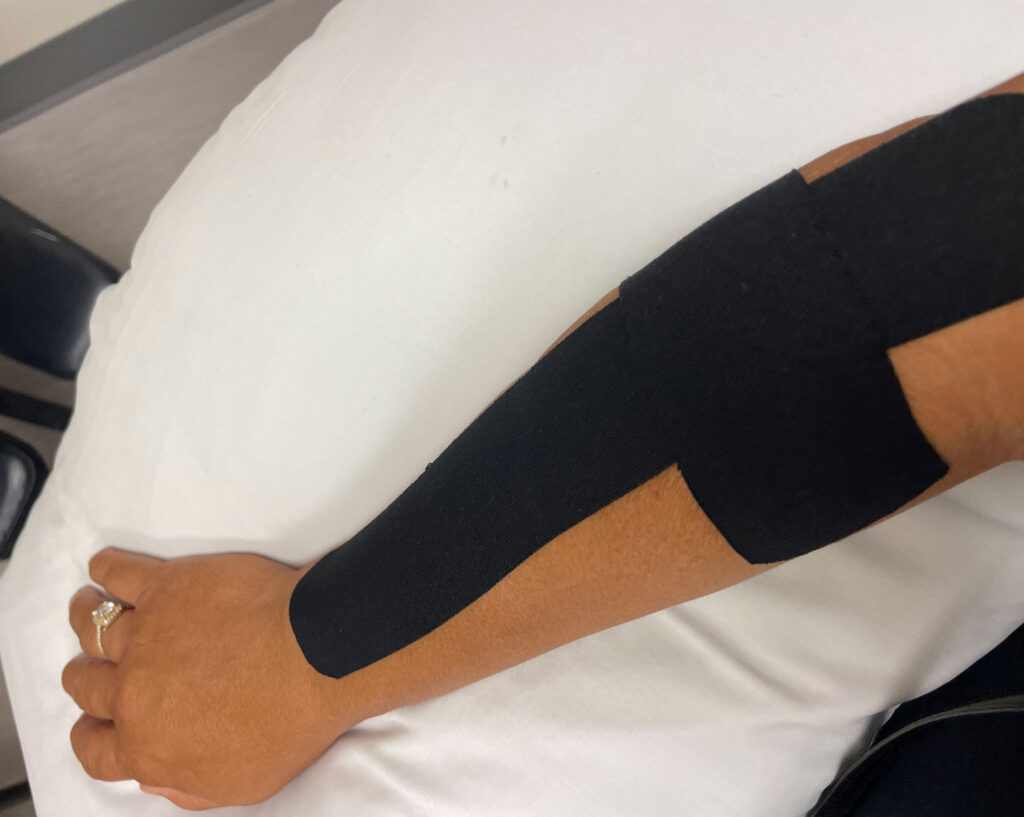
Taping—Does It Really Work?
When, Why, and How Athletic Taping Supports Injury Relief and Recovery
Athletic kinesio taping has become increasingly popular among both recreational and competitive athletes—but many still wonder if it’s truly effective. Whether you’re dealing with sore joints, a lingering strain, or just trying to prevent an injury during physical activity, taping can offer valuable support. However, it’s important to understand that taping is most effective when used strategically and in combination with a well-rounded rehabilitation plan. Let’s explore what taping does, which injuries it can help, and when it’s appropriate to use.
How Athletic Tape Helps the Body
Athletic tape works by offering external support to muscles, tendons, and joints, allowing them to function more efficiently without being overstrained. There are generally two main categories: supportive rigid tape and stretchable kinesiology tape. Rigid tape is used to stabilize joints and limit unwanted movement, while kinesiology tape is designed to move with the body, offering support without restricting motion.
Kinesiology tape is applied in specific patterns and tension levels to help improve blood circulation, reduce mild swelling, and give the nervous system better feedback about joint position and muscle control. For many people, taping can help reduce the sensation of pain, guide proper movement, and encourage healing.
Injuries and Conditions Where Taping May Be Useful
Athletic taping can be a supportive option for a wide range of common sports injuries and movement limitations. Some of the most common uses include:
- Knee pain, including tracking issues or overuse injuries
- Ankle sprains and joint instability
- Muscle strain and tendon discomfort (like tennis or golfer’s elbow)
- Lower back soreness due to posture or movement dysfunction
- Plantar fasciitis or Achilles irritation
- Shoulder fatigue or impingement
- Shin splints and calf tightness
- It’s also frequently used during sports like tennis, pickleball, and golf to help reduce muscular stress or assist with joint control during repetitive motion.
When Is the Right Time to Use Taping?
Taping is best used during rehabilitation or return-to-activity phases, particularly when a patient is still healing or regaining strength and mobility. It’s not meant to replace therapy or hide pain—rather, it supports your body as you work toward restoring function and performance. In some cases, taping can also be helpful during workouts or sport-specific movements that trigger discomfort, as long as it’s not used to push through serious pain or injury.
To be most effective, taping should be applied by a trained professional who understands anatomy, movement patterns, and the goals of your recovery. A physical therapist can assess your condition and determine whether taping will benefit you as part of your personalized care plan.
Taping as One Tool in a Broader Recovery Strategy
At VIPT Concierge Physical Therapy, taping is used thoughtfully—as part of a comprehensive treatment approach that may include manual therapy, mobility work, strength training, and advanced modalities like dry needling or Class IV laser therapy. It’s not a standalone fix, but when used appropriately, taping can improve body awareness, reduce strain on injured tissues, and help you move more confidently as you heal.
If you’re recovering from an injury or experiencing discomfort during movement, taping may offer the extra support your body needs—especially when paired with expert guidance and hands-on care. Let us help you determine whether it fits into your recovery journey.